Cutting-Edge Applications of Just-in-Time Adaptive Interventions

Just-in-Time Adaptive Interventions (JITAI) represent a groundbreaking approach to personalized interventions. They harness real-time data and adaptive strategies to deliver tailored support when individuals need it most.
This article explores the definition, principles, applications, and future potential of JITAI across various fields, highlighting its transformative impact on intervention effectiveness.
Understanding Just-in-Time Adaptive Interventions
Just-in-Time Adaptive Interventions (JITAI) are designed to provide personalized support by dynamically adjusting interventions based on ongoing data collection and individual responses. Unlike traditional interventions that follow predetermined protocols, JITAI emphasizes real-time responsiveness and adaptive decision-making.
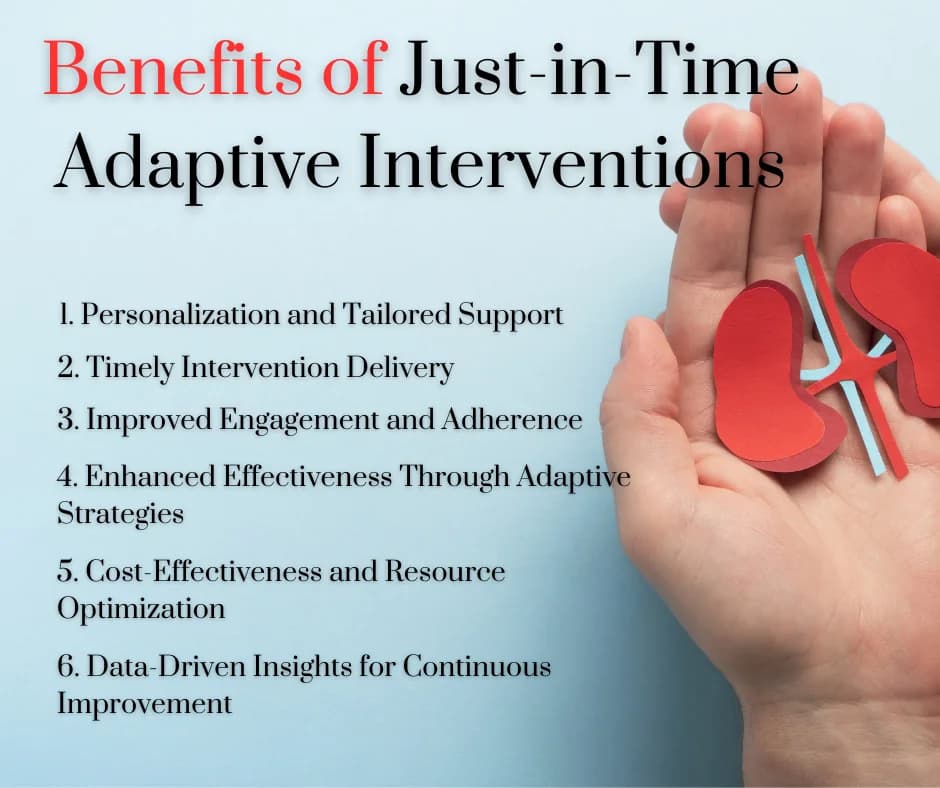
Due to real-time responsiveness, applying just-in-time adaptive interventions can also benefit your research. Here are some ways:
- Personalization and Tailored Support: JITAI leverages real-time data to personalize interventions based on individual needs, preferences, behaviors, and current contexts.
- Timely Intervention Delivery: JITAI can deliver interventions precisely when they're needed. JITAI systems can trigger interventions at critical moments. This timely response can prevent the escalation of symptoms or behaviors, improving outcomes in health management or behavioral change programs.
- Improved Engagement and Adherence: This personalized approach increases initial participation and promotes sustained adherence to interventions over time.
- Enhanced Effectiveness Through Adaptive Strategies: Traditional interventions often follow standardized protocols that may not account for individual variability or changing circumstances. In contrast, just-in-time adaptive intervention utilizes adaptive decision rules and algorithms to refine intervention strategies based on ongoing data analysis.
- Cost-Effectiveness and Resource Optimization: JITAI can potentially reduce overall healthcare costs by targeting interventions more precisely and effectively. By preventing unnecessary interventions and focusing resources where they are most needed, JITAI optimizes resource allocation.
- Data-Driven Insights for Continuous Improvement: JITAI generates vast amounts of data through real-time monitoring and intervention delivery. This data can be analyzed to derive insights into intervention efficacy, individual responses, and factors influencing outcomes.
Key Components of Just-in-Time Adaptive Interventions
Effective JITAI implementations rely on foundational components that enable personalized interventions based on individual needs and real-time data feedback.
1) Real-Time Data Collection and Monitoring
Central to JITAI is the continuous collection and monitoring of relevant data. This may include data from wearable devices, mobile apps, or sensors that capture behavioral, physiological, or environmental information. For instance, a mobile health app tracking physical activity levels could trigger personalized exercise reminders based on current activity patterns.
You Can Also Read: Incorporating Fitbit Into Ecological Momentary Assessment in Research
2) Decision Rules and Algorithms for Adaptive Interventions
Decision rules and algorithms are crucial in just-in-time adaptive intervention systems. They process incoming data and determine appropriate interventions. These rules are often designed through iterative learning processes, incorporating machine learning algorithms to predict responses and optimize intervention delivery over time.
3) Personalization and Tailoring Interventions Based on Individual Needs
JITAI thrives on its ability to tailor interventions to individual circumstances. Whether adjusting medication reminders for optimal adherence or providing immediate stress-relief strategies based on real-time emotional data, personalization enhances intervention relevance and effectiveness.
Applications in Health and Well-being
JITAI has demonstrated significant potential across various domains of health and well-being, reshaping how interventions are delivered and experienced.
According to this study entitled Just-in-Time Adaptive Interventions (JITAIs) in Mobile Health: Key Components and Design Principles for Ongoing Health Behavior Support, the researchers discovered that by using mobile devices to offer timely and personalized support, we can make interventions more effective and keep people engaged longer.
This is crucial as we move into a new era where technology can do more to support our health and well-being. For this reason, learn the applications of just-in-time adaptive interventions in health and well-being research.
1) Use of JITAI in Chronic Disease Management
In managing chronic diseases like diabetes or hypertension, JITAI can adjust medication reminders, dietary recommendations, or exercise prompts based on real-time physiological data. This personalized approach improves treatment adherence and health outcomes.
2) Behavioral Interventions and Addiction Recovery
For behavioral changes such as smoking cessation or substance use disorders, just-in-time adaptive intervention offers personalized support by adapting strategies to individual triggers and contexts. This flexibility helps sustain behavior change and reduce relapse rates.
3) Mental Health Support and Crisis Intervention
JITAI plays a critical role in mental health by providing immediate support during crises or detecting early warning signs of depression or anxiety. Real-time interventions can offer coping mechanisms or swiftly connect individuals to professional support services.
Implementing Just-in-Time Adaptive Interventions
While promising, implementing JITAI presents challenges and ethical considerations that require careful consideration for your research study.
1) Challenges and Considerations in Designing JITAI Studies
Methodological challenges include designing robust study protocols that balance experimental rigor with real-world applicability. Moreover, integrating diverse data sources and ensuring seamless intervention delivery pose logistical challenges.
2) Ethical Implications and Considerations for Participant Privacy
Real-time data collection raises privacy concerns, necessitating transparent consent processes and robust data protection measures. Safeguarding participant confidentiality while leveraging sensitive health data is paramount in JITAI research and practice.
For this reason, you must look for research software that adheres to GDPR and HIPAA compliance to ensure ethical considerations. For instance, you can create surveys through the ExpiWell platform with security, privacy, and accessibility because they adhere to GDPR and HIPAA.
3) Strategies for Overcoming Implementation Barriers
Collaborative efforts among researchers, clinicians, and technology developers are essential to overcoming technological, logistical, and regulatory barriers. Continuous refinement of algorithms and intervention protocols based on stakeholder feedback fosters sustainable, just-in-time adaptive intervention implementation.
Future Directions and Innovations
According to the article by Elsevier, the research ecosystem has been undergoing rapid and profound change, and researchers should adapt to the future directions of research methods. So, get to know how JITAI will evolve in the coming years.
1) Emerging Trends in JITAI Research
Advancements in adaptive algorithms and predictive analytics are poised to enhance JITAI's precision and effectiveness. Future research may explore hybrid models integrating AI with human judgment for optimal intervention outcomes.
2) Integration of JITAI with Wearable Technology and IoT Devices
The synergy between just-in-time adaptive intervention and wearable devices, IoT sensors, and mobile health technologies enables seamless data integration and real-time intervention delivery. This convergence expands JITAI's reach and impact on everyday health management.
3) Potential Impact of JITAI on Public Health Policies
JITAI's scalability and effectiveness may influence policy-making by demonstrating cost-effectiveness and improved health outcomes. Policymakers could leverage JITAI data insights to inform public health strategies and resource allocation.
Contributing to the JITAI Development
In conclusion, Just-in-Time Adaptive Interventions (JITAI) represent a revolutionary approach to personalized interventions, offering tailored support through real-time data and adaptive strategies. As JITAI continues to evolve, its potential to transform healthcare delivery and improve outcomes remains substantial.
As part of the research community, you can contribute to the ongoing development of just-in-time adaptive intervention by integrating it with your EMA studies. To do so, you can use ExpiWell to conduct research while using the JITAI method.
Reference:
- Mulligan, A. (2022, April 20). The future of research revealed. www.elsevier.com. https://www.elsevier.com/connect/research-futures-2022
- Nahum-Shani, I., Smith, S. N., Spring, B. J., Collins, L. M., Witkiewitz, K., Tewari, A., & Murphy, S. A. (2017). Just-in-Time Adaptive Interventions (JITAIs) in Mobile Health: Key components and design principles for ongoing Health Behavior support. Annals of Behavioral Medicine, 52(6), 446–462. https://doi.org/10.1007/s12160-016-9830-8